
The Dolomites Beyond Cortina: A Local's Guide to Getting It Right
TheVoyageCo asked Kristine for her local insights for the Dolomites. This is what she said.
The Dolomites reward visitors who choose one area and stay. The distances are longer than they look on a map, and mountain roads do not match the driving times AI itinerary tools assume. Kristine recommends June or September for the calmest, clearest version of the range, skipping Cortina d'Ampezzo in favour of less famous valley towns, and ordering Tris de Canederli on at least one mountain dinner.
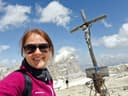
Kristine
I’m Kristine from Love Your Italy, and I will help you plan your dream trip to the Dolomites and Northern Italy.Having lived in Northern Italy and explored the region extensively, I design trips that flow naturally, feel beautifully paced, and let you fully enjoy the area.Whether you’re dreaming of
The Dolomites draw visitors from across the world with good reason. The mountain scenery is, in Kristine's own words, the place where your most beautiful dreams become reality. But Kristine, who knows northern Italy's mountain landscape deeply, has also watched those visitors make the same planning mistakes at scale. She has opinions about Cortina. She has opinions about AI itinerary tools. And she has one piece of advice that most people ignore.
Kristine lives in the Dolomites and advises travellers through The Voyage Co.
A Sense of the Dolomites
Kristine does not begin with a trail or a viewpoint. She begins with how visitors arrive: with too many destinations on the list and too little understanding of the geography between them.
Q. How would you describe the Dolomites to a friend?
It is the place where your most beautiful dreams become reality. Sharp grey peaks, alpine meadows, lakes that look painted, villages that feel as though they have been there forever. The scenery is genuinely as good as the photographs suggest. The difficulty is that almost everyone arrives with a plan to see all of it.
Q. What do you want people to understand about the region before they arrive?
That the Dolomites are not one place. They are a UNESCO range spread across Trentino, South Tyrol and the Veneto, with multiple valleys, dozens of small towns, and very different cultures from one side to the other. A trip that tries to cross all of those in three days is not really a trip. It is a long drive interrupted by photo stops.
Q. And what tends to happen with the people who plan it like that?
They arrive exhausted. They spend more time in the car than out of it. They photograph famous viewpoints and never see the smaller valleys that would have made the trip. The people who leave the Dolomites in love with the region are almost always the ones who chose one area and stayed.
The Dolomites are not one place. A trip that tries to cross all of them in three days is not really a trip. It is a long drive interrupted by photo stops.
Where should you actually go in the Dolomites?
Kristine subverts the usual hidden-gem advice and is direct about the town she thinks is overrated.
Q. What's one place in the Dolomites that visitors often miss?
Generally, the popular spots are popular for a reason. Adjust when and how you visit them, and you can go both in an environmentally friendly way and without the crowds. I am not pointing you to a secret valley. I am pointing you to the same places everyone visits, but with a different approach: earlier in the morning, outside peak season, arriving by bus rather than by car.
Q. What does that look like in practice?
Lago di Braies, Tre Cime di Lavaredo, the Seceda ridgeline. Visited at 7am in June, with the morning light still on the peaks and almost no one else in the photograph, those places are entirely different from what they look like at noon in August. The viewpoint has not changed. The conditions of seeing it have.
Q. And what would you call famous but overrated?
I am going to get hate for this, but the town of Cortina d'Ampezzo. There are many more charming towns in the Dolomites. The reputation is strong (ski resort history, Italian luxury, the Olympic association) but the reality has been overtaken by the reputation, and the town itself does not deliver what most visitors are actually looking for.
Q. So where should travellers base themselves instead?
Pick a valley and a base in that valley. The Alta Badia, Val Gardena, the Val di Funes, Selva di Cadore, or one of the smaller villages in Val Pusteria. Each one gives you a base for several days of walking, eating, and recovering, in a landscape that does not require a four-hour transfer to start enjoying it.
How to Plan 48 Hours in the Dolomites
The single rule Kristine returns to most often is also the one most commonly ignored.
Q. If someone only had 48 hours in the Dolomites, what would you tell them to prioritise?
Choose one area and stay there, without any day trips. The distances are longer than they seem on a map. Visitors look at the Dolomites and build itineraries that connect points from one end of the region to the other. The map does not show the mountain road reality: journeys that appear short take much longer, the driving is demanding, and arriving somewhere tired and rushed misses the entire point.
Q. What does a good 48-hour plan actually look like?
Pick one valley. Sleep there both nights. Spend day one walking from the village, on a trail that you can do at your own pace, with a hut lunch somewhere along the way. Spend day two on one bigger walk or a ride up to one of the famous viewpoints, with a long late lunch on the descent. Drive nowhere except between your bed and the start of the walk.
Q. Why is this so important to get right?
Because the entire experience of the Dolomites is altered by it. The light at six in the morning over your valley. The way the same peak looks at lunch and at sunset. The mountain hut that feeds you twice in two days and starts to recognise you. None of this happens if you spend the trip on the road between viewpoints. It happens only if you give one place your time.
Q. What mistake do you see travellers make most often?
The main one? Trusting AI to put places to visit in a logical manner. Way too many itineraries I have seen have driving times that would work in theory but not in reality. AI-generated travel itineraries for mountain regions tend to rely on straight-line distances and ignore the actual experience of driving on winding roads at altitude, with other tourists doing the same, often with road closures and limited parking. Treat any AI itinerary for the Dolomites as a starting point for revision, not a plan to follow.
When to Come to the Dolomites
Two months are her answer, and the reasoning is the same as the question of where to go: avoid the version of the range that has been compressed by the season.
Q. What's the best time of year to visit the Dolomites?
June and September. It is the least crowded, the weather is nice, and prices are lower. July and August are peak months, when the most popular trails and viewpoints fill up quickly, parking becomes a problem, and the smaller huts run on a different rhythm because they are stretched.
Q. What changes about the experience in June and September?
June offers the mountain landscape before the main season, often with wildflowers and clear conditions. September offers the same calm after it ends, with autumn light, fewer visitors, and the larches starting to turn yellow in some valleys. Both months give you the Dolomites at a pace the landscape deserves, and the photographs that come back from June or September trips look like the photographs the season is famous for.
Q. And the months you would steer travellers away from?
Mid-July to mid-August on the popular routes. The peaks are still there, the trails are still beautiful, but the experience is reshaped by the crowd. If you can only travel in those weeks, push hard towards the less famous valleys, walk earlier in the morning than feels reasonable, and avoid the iconic photo stops at midday. The shoulder season is the better answer if you can find it.
What to Eat and Drink in the Dolomites
Kristine points to one dish that belongs to the altitude and the mountain culture of northern Italy.
Q. What local food must visitors try?
Tris de Canederli. The traditional bread dumplings of the Dolomites come in three varieties in this classic presentation: spinach, cheese, and a meat version (typically speck), served in broth or with melted butter and grated cheese. It is the kind of dish that belongs to the altitude, and it is the non-negotiable food experience of the region.
Q. Where should travellers order it?
Any of the rifugi (mountain huts) that serve a full menu will have a version of canederli, and the version eaten at altitude after a morning of walking is the one most travellers remember. In the valley villages, the older family-run restaurants, often described as a stube in South Tyrol, are the right place. The dish is not fancy. It is meant to be eaten with hunger.
Q. And to drink?
Local wines from Trentino and Alto Adige, the German-speaking province of South Tyrol. The whites are quietly serious (Gewürztraminer, Müller-Thurgau, Sylvaner), and the reds (Lagrein, Schiava) carry the mountain culture in the glass. After dinner, one of the local grappas or a small glass of Williams pear schnapps. Mountain food asks for mountain drinks.
Kristine's Dolomites are not the version on the highlights reel. They are the slower version that arrives when you put down the long itinerary, choose one valley, and stay. Skip Cortina. Distrust the AI itinerary. Walk in the morning. Eat canederli at a rifugio. Visit in June or September. Find the range once at its own pace, and the wider trip rearranges itself around it.

Dolomites travel FAQ
Explore more Dolomites-specific insights to plan your next trip with locals.


