How to Eat Like a Roman: A Local's Guide to the Perfect Food Day in Rome
TheVoyageCo asked Massimo to map a perfect food day in Rome, hour by hour. This is what he said.
A perfect Roman food day runs to a specific rhythm: cappuccino and maritozzo at the bar by mid-morning; pizza alla pala for a quick lunch; aperitivo at sunset; dinner starting at 8:30 with multiple courses and no rush; then gelato walked through the city at night. Massimo sends every visiting friend on this loop. The food is simple, the timing is everything.

Massimo
Hi, I'm Massimo, and for ten years I've been hosting tourists from around the world to discover Rome, its treasures, colors, and flavors. After studying Architecture and Art History, and after many years as an Art Director in Advertising, I decided to dedicate myself to tourism, driven by the desire
Rome is not just about history and art. It is a city where food matters, a lot, and where the way you eat matters almost as much as what you eat. The real challenge for any visitor is knowing what to choose, when to eat, and how to do it properly. Here is a simple framework: a perfect day of eating in Rome, the way Romans actually do it.
Massimo lives in Rome and advises travellers through The Voyage Co.
Morning in Rome: cappuccino and maritozzo at the bar
Start your morning at the counter of a busy, slightly chaotic bar. Every Roman neighbourhood has one: the kind of place where the coffee machine runs continuously, where regulars exchange two words with the barista and are gone in three minutes.
Order a cappuccino and a maritozzo, the iconic Roman breakfast: a soft, pillowy bun filled with freshly whipped cream. It arrives oversized, optimistic, and almost impossible to eat neatly. The cream ends up on your fingers, your lips, occasionally your nose. This is, as any Roman will tell you, part of the experience.
One rule: maritozzo is a morning-only ritual. Do not be late. By eleven the trays in the window have thinned and by lunch they are gone. Order the cappuccino standing at the bar, not seated. Standing at the counter you pay one price; sitting at a table, you pay another, and you have changed the entire meaning of the cup.
Maritozzo is a morning-only ritual. By eleven the trays in the window have thinned, and by lunch they are gone.
What do Romans actually eat for lunch?
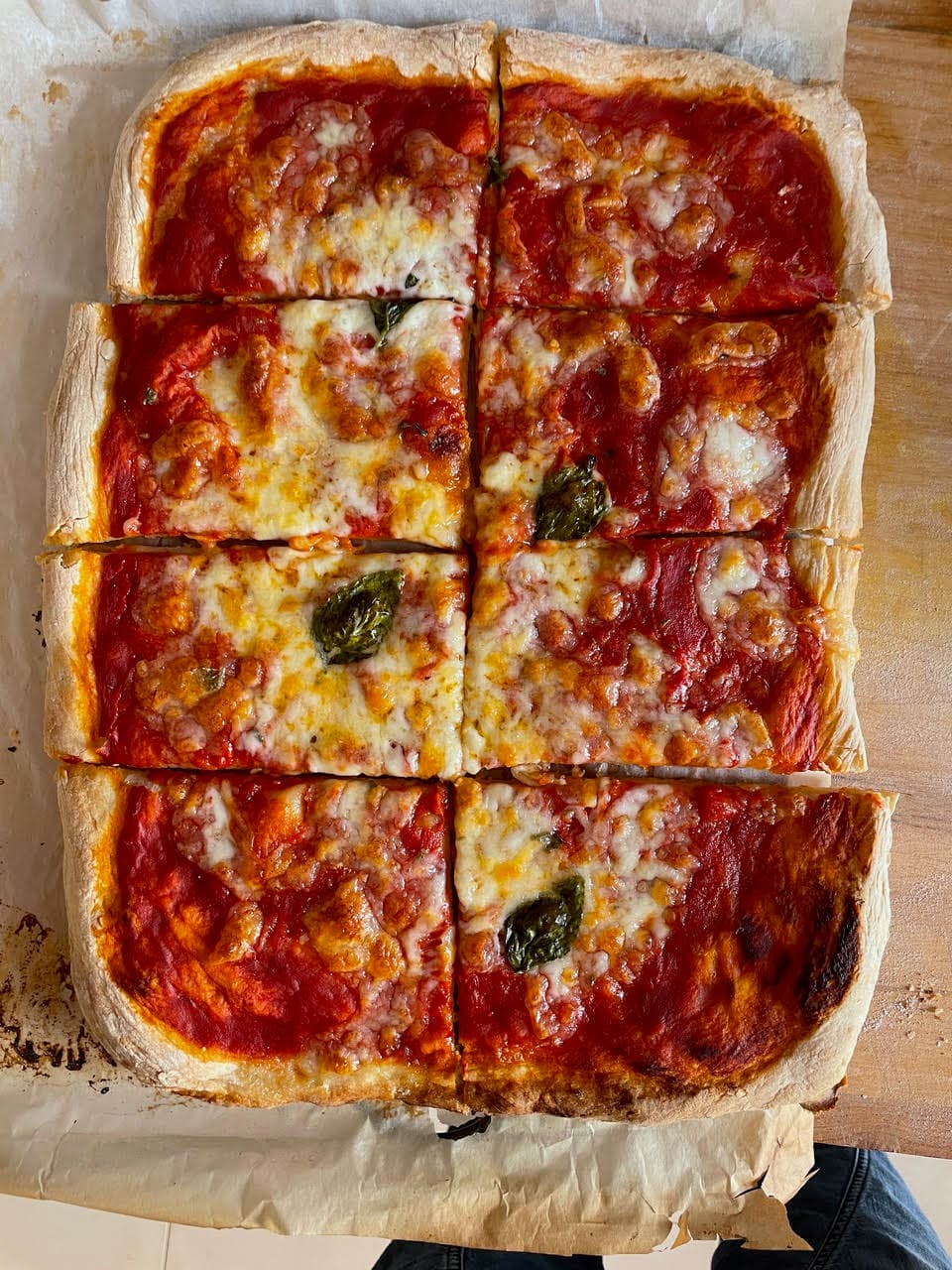
Lunch in Rome is quick. That does not mean compromising on quality. The ideal midday choice is pizza alla pala: thin, crispy, and light, and very different from the classic round pizza. It is long, served in slices, and named after the wooden paddle used to slide it in and out of the oven.
The simplest version is often the best: pizza rossa, topped with tomato, a pinch of salt, and a drizzle of olive oil. Nothing else. Just good ingredients and a properly hot oven. The dough is the entire test. If it is light, slightly chewy, and crisp at the edges, the pizzeria is doing it right.
You order by weight at the counter. Point at what you want, the slice is cut, the price is weighed, and you eat standing or walking. There is no need to sit. Romans eat pizza al taglio on the way somewhere, not as a destination, and the bakery a few streets from any major monument almost always beats the restaurant next door to it.
Aperitivo in Rome: the hour that belongs to the sunset
Then comes one of the most beautiful moments of the Roman day: the aperitivo hour at sunset. A glass of wine, a spritz, a few olives, maybe some small snacks. Nothing complicated, and nothing that requires a reservation. But in the right spot, at the right time of evening, it becomes the kind of moment you find yourself talking about later.
Rome at the end of the afternoon, the light going warm and low and gold, a glass in your hand, is an experience that requires very little explanation. The wine bars of Trastevere, Monti, and the area around Campo de' Fiori all do it well. So do the rooftops of certain hotels, if you want a slightly more dressed-up version.
What matters is the timing. Aperitivo is the gap between the working day and dinner, and it is meant to be unhurried. One glass, two if you want, and then on. It is not a meal and it is not an event. It is the hour you spend with the city before sitting down to eat properly.
Dinner in Rome: the ritual that starts late and runs long
Dinner in Rome is serious business. It rarely starts before 8:30pm, and it is not simply about eating. It is a ritual. You sit down, you take your time, you enjoy. Menus follow a traditional structure: starters, first courses (pasta, rice, soup), main courses (meat or fish), side dishes, and desserts.
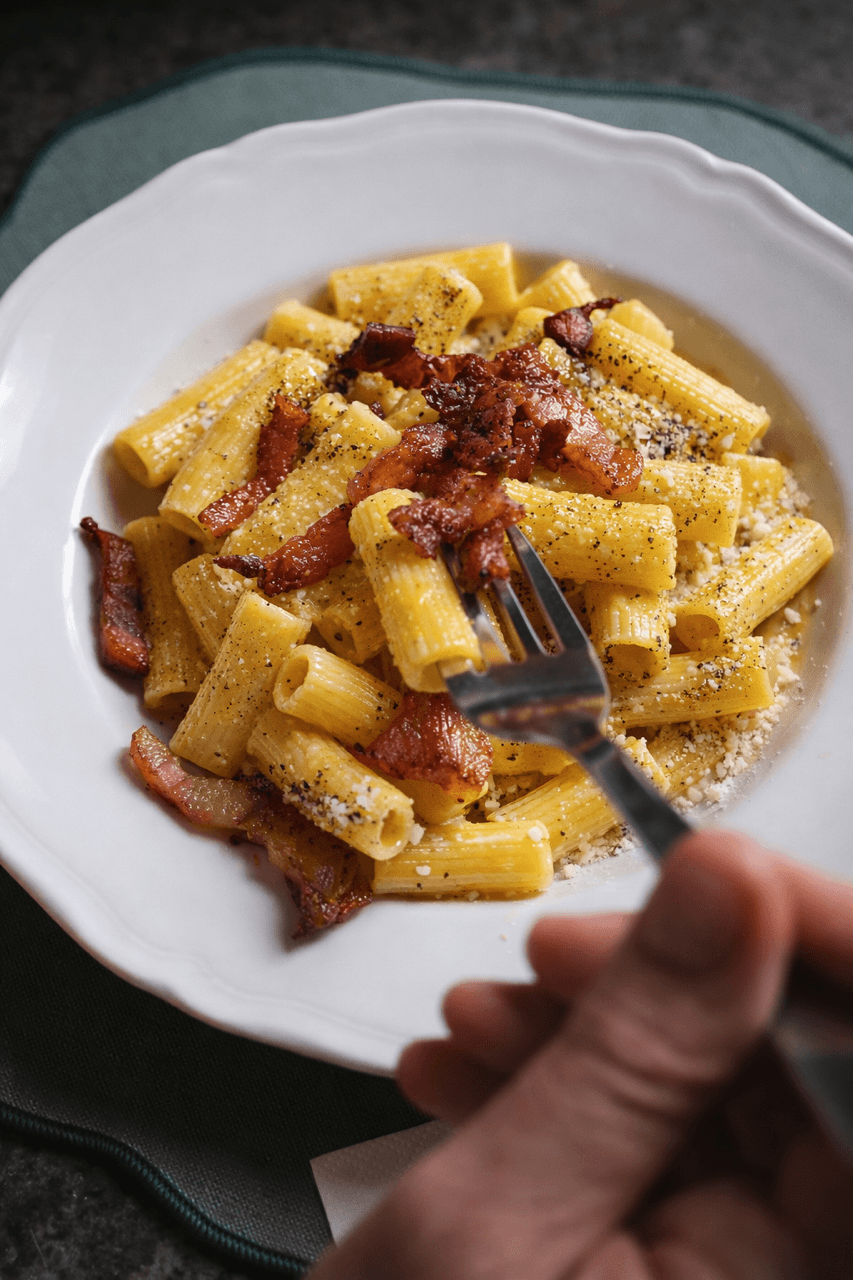
It is tempting to work through all of it, and at least once you probably should. More often, the smarter approach is balance: a first course and a side, or a starter and a main. Order one of the four classic Roman pastas (cacio e pepe, gricia, carbonara, amatriciana) and a vegetable side, and you have a proper Roman dinner.
Do not underestimate the sides. In Rome, vegetables are simple, seasonal, and often extraordinary when done correctly: artichokes in winter, roasted peppers in summer, the fresh, no-frills insalata mista that needs nothing more than olive oil and salt. These are not afterthoughts.
And dessert? It rarely happens at the restaurant. That is not where it belongs. You pay the bill, you walk out, and you let dinner end on its own.
The final act: gelato on foot through Rome at night
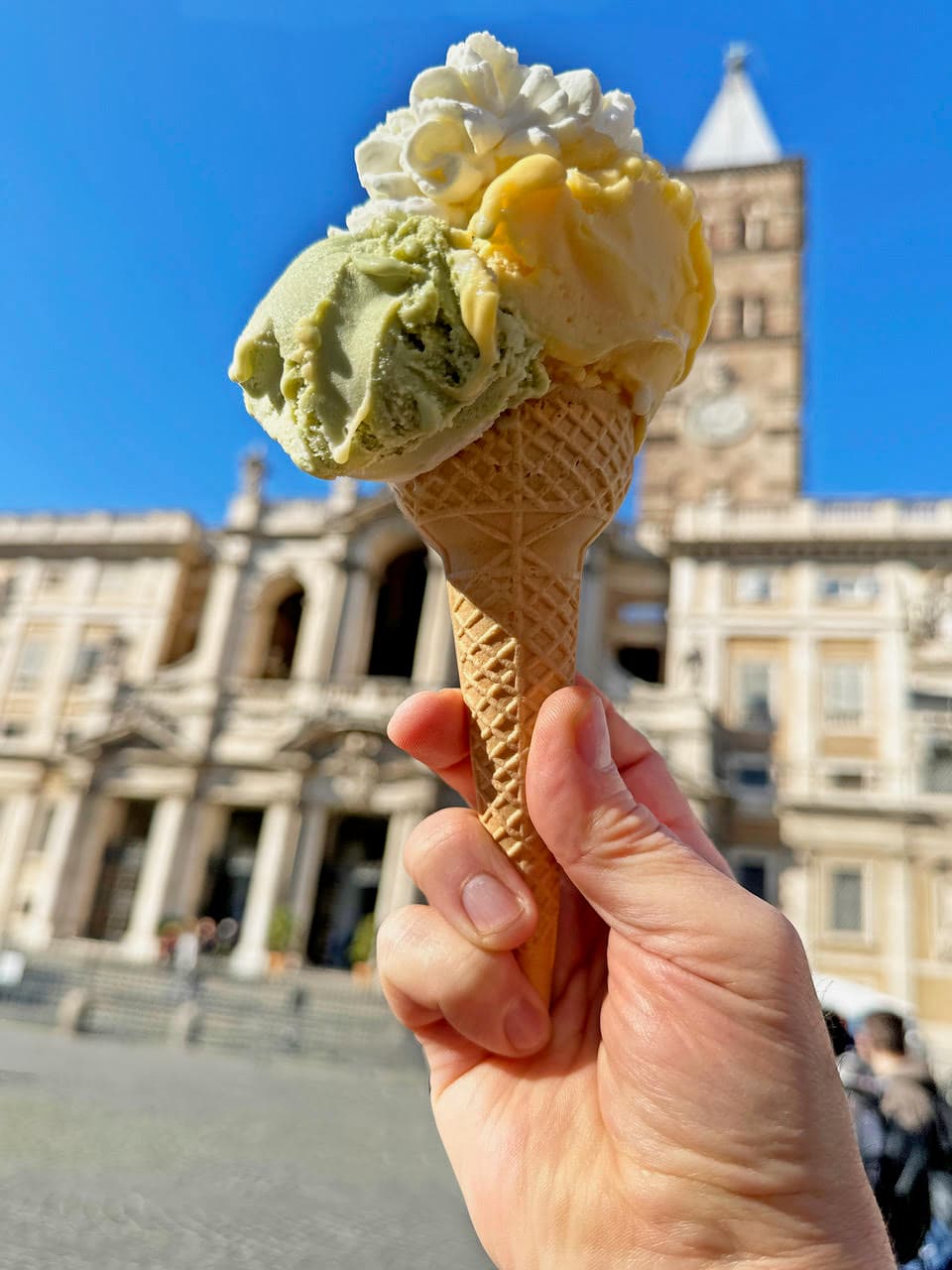
Instead, you go for a walk. You find a gelateria. A cone in hand, moving slowly through Rome at night, past lit facades and quiet piazzas, that is how a proper Roman food day ends.
It is a ritual that belongs entirely to this city, and once you have done it, one you will want to repeat every evening. Pick a gelateria that makes the gelato on site (the colours give you the answer: the more electric, the worse), order two flavours in a small cone, and walk. Do not sit.
The route does not matter. Trastevere into Piazza Trilussa, Monti out towards Via dei Fori Imperiali, the Pantheon at midnight when the square is finally quiet. Rome at night with a gelato in your hand is the city as it lives, not as it performs for the day.
This is a starting point. The real difference lies in the details: where to go, when to go, and how to choose. Romans do not optimise eating. They sequence it. Morning bar, quick lunch, sunset glass, late dinner, midnight walk. Get the order right and the city feeds you for as long as you stay.
Eat-like-a-Roman FAQ
For a broader picture of how to spend time in Rome, see Barbara's 48-hour guide and Seda's 10 favourite places to eat.


