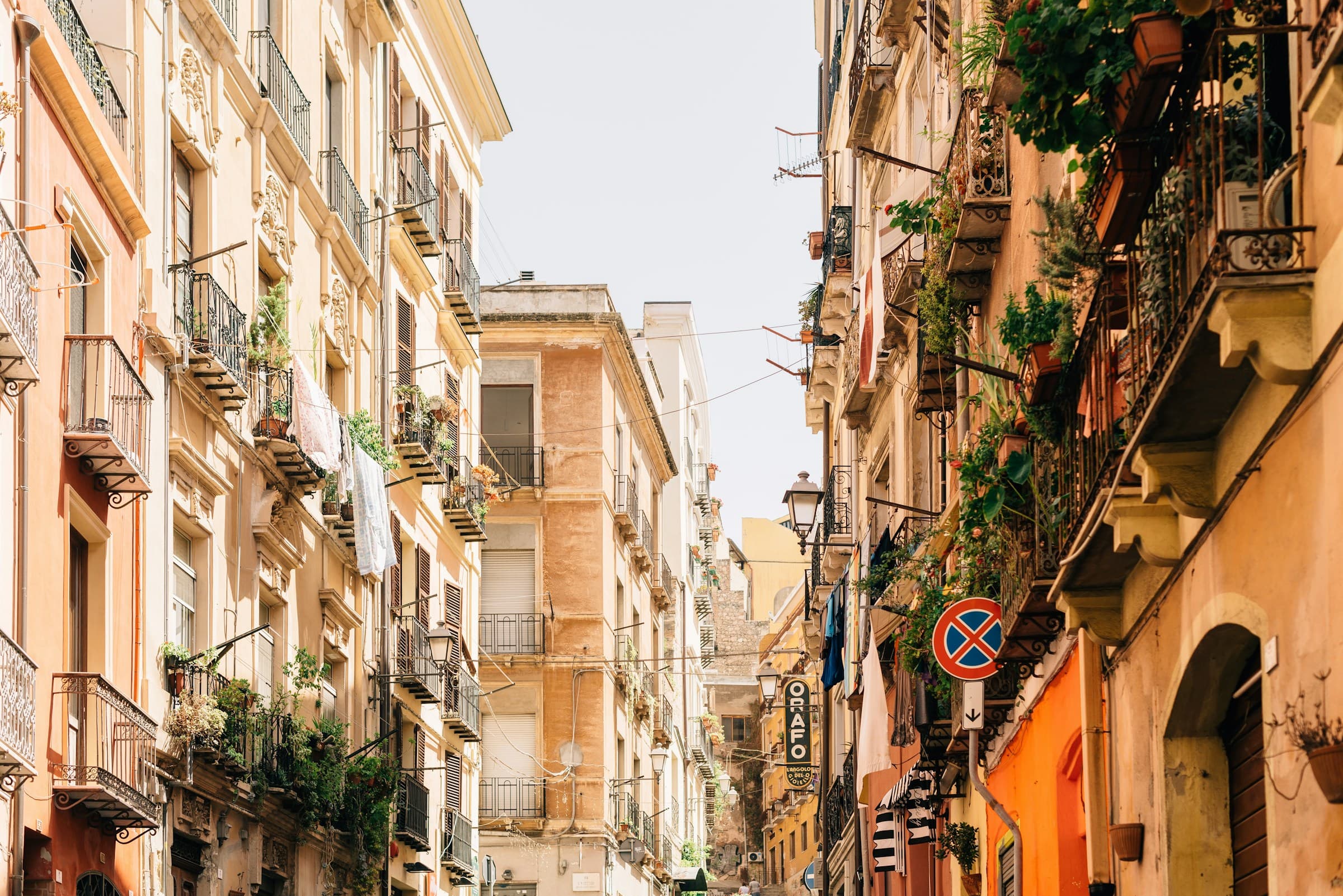
How to spend 48 hours in Alghero, Sardinia, with Manuela's insider tips
TheVoyageCo asked Manuela for her local insights for Sardinia. This is what she said.
Most visitors to Sardinia go to the coast and stop there. Manuela argues the island's best experiences are inland: ancient nuraghi tower structures, Barbagia stone villages, a cuisine with almost nothing in common with coastal seafood, and a culture that has been developing in relative isolation for thousands of years. Costa Smeralda is one luxury enclave. The rest of Sardinia is a different and much larger thing.
manuela
I was born and raised in Rome, in love with my city, and I'd love to share my passion with visitors eager to explore the Eternal City. So, just like me, you'll appreciate Rome as an open-air museum, for its historical heritage but also for its truly inspiring atmosphere.My certification badge, which
Manuela returned from a 48-hour trip to Alghero recently. She says there was too much to see and taste to explain in a few words. That is always her point about Sardinia.
Manuela lives in Sardinia and advises travellers through The Voyage Co.
A Sense of Sardinia
Manuela does not begin with a beach. She begins with the relationship between the coast that everyone photographs and the island that lives behind it.
Q. How would you describe Sardinia to a friend who has not been?
Sardinia is an island that has been developing in relative isolation for thousands of years, with its own language, its own architecture, its own food culture, and a relationship with the rest of Italy that is more complicated than it looks from the outside. The coast is the famous part. The interior is the part most visitors never reach, and it is where the island keeps its best things.
Q. What do you want people to understand before they arrive?
That Sardinia is much more than Costa Smeralda. The water along the northeast coast and the beaches around the south and west are genuinely beautiful, the kind of blue that looks photoshopped until you are standing in it. Getting stuck at the beaches means you would miss all the hidden gems inland.
Q. What does the interior have that the coast cannot give visitors?
Ancient stone villages built from basalt and granite. Nuraghi, the Bronze Age tower structures that are unique to the island, rising from hillside pastures. A cuisine with almost nothing in common with coastal seafood: roasted suckling pig, pane carasau, Cannonau wine, a wood-fired oven in almost every village. A language and a set of festivals that are still alive in ways the coastline cannot show you.
Getting stuck at the beaches means you would miss all the hidden gems inland.
Where do locals send friends in Sardinia?
Manuela's answer points inland, and she names what is there.
Q. Where would you send a friend who wants to see something beyond the famous beaches?
Inland. The Barbagia region in the island's interior, where the local dialect is still spoken and the festivals still follow ancient calendars, is Sardinian in a way that the resort coastline simply is not. Some of Sardinia's best-kept secrets are still off the usual tourist trail.
Q. What are the nuraghi and why do they matter so much?
Nuraghi are Bronze Age tower structures, built around 1800 to 1100 BC, found only in Sardinia. There are over seven thousand of them across the island, in varying states of preservation, and they are completely unique to this place. The most famous, Su Nuraxi at Barumini, is a UNESCO World Heritage Site. They are older than most of the famous monuments of mainland Europe, and almost nobody who visits Sardinia for the beaches sees one.
Q. Why do you not name everything publicly?
Some things stay better when they are not on the map. The reasoning is straightforward: the moment a small village in the Barbagia ends up on a travel listicle, the rhythm of the place changes, and the thing that made it worth visiting becomes harder to find. I introduce visitors to specific places on my tours rather than publishing widely. What I will say is that the island rewards those who are willing to move away from the coastline and spend time with someone who knows it properly.
What Costa Smeralda is, and what it is not
Manuela is clear and not dismissive about the most famous stretch of coast.
Q. What do you think of Costa Smeralda?
Costa Smeralda is beautiful, but not representative of the real Sardinia. The water clarity is real. The yachts in Porto Cervo are real. What is not present is anything that resembles ordinary Sardinian life.
Q. What is Costa Smeralda actually, then?
Costa Smeralda is the stretch of northeastern coastline developed in the 1960s by the Aga Khan as a luxury resort destination. It is polished, expensive, and deliberately constructed around an idea of Mediterranean glamour. It is a luxury destination that happens to be located in Sardinia, more than it is a piece of Sardinia.
Q. So when does it make sense, and when does it not?
It makes sense if you are coming for high-end beach tourism and have a clear idea of what that involves. It does not make sense if you are coming to understand the island. The villages in the Barbagia, where the local dialect is still spoken and the festivals still follow ancient calendars, are Sardinian in a way that the resort coastline is not.
48 Hours: the Alghero Approach
Manuela's recent trip to Alghero is the model she points to.
Q. How would you structure 48 hours in Sardinia?
Use Alghero as the base. Alghero sits on the northwest coast, where the influence of medieval Catalan rule is still visible in the street names, the architecture, and parts of the local language. It is one of Sardinia's most distinctive towns and far less visited than the southeast coast or Costa Smeralda.
Q. What does day one look like?
Walk the old walled town in the morning, then take a boat or the cliffside staircase to the Grotta di Nettuno, the sea cave at Capo Caccia. The cave is reached by an extraordinary descent down a staircase cut into the cliff face, and the interior is one of the more dramatic underground spaces on the Italian coast. Lunch back in Alghero, at one of the tables behind the cathedral.
Q. And day two?
Drive down to Bosa, a small riverside town with a medieval castle and colourful fishermen's houses lining the riverbank. After Bosa, go inland. The food changes entirely from coast to mountains: roasted suckling pig, pane carasau (the ancient flatbread that dries to a crisp), and Cannonau wine from the local red grape that is ancient enough to be mentioned in classical sources.
Q. Why pair Alghero with the interior on the same trip?
Because the contrast is the point. The Catalan-influenced coastal town in the morning, the Bronze Age stone village in the afternoon. The two together tell you more about Sardinia than a week of beach hopping. There is too much to see and taste to explain in a few words. The island does not compress well into a listicle. It requires a conversation and a plan.
When to Visit and What to Eat
Manuela's answer on timing is generous and slightly unusual.
Q. When is the best time to visit Sardinia?
Any time of year. Once you fall in love with Sardinia, you'll want to return, whether it's sunny, rainy, hot or cool. In practical terms, late spring and early autumn avoid the peak summer crowds on the coast, and the interior is accessible and comfortable in both seasons.
Q. What about winter?
Winter brings a Sardinia that almost no visitor sees: empty, authentic, and worth experiencing for exactly that reason. The interior is comfortable for walking, the food becomes denser and richer, and you may have a Bronze Age site to yourself on a Tuesday morning. Bring layers and a willingness to drive on smaller roads.
Q. And what is the one Sardinian thing every visitor should eat?
The seada (also spelled sebada): a fried pastry filled with fresh cheese, typically a local pecorino, and drizzled with bitter honey. It sits somewhere between a dessert and a cheese course and tastes like neither category quite covers it. You will find it in traditional restaurants across the island, more commonly inland than on the coast. Order it once. You will look for it for the rest of your trip.
Manuela's Sardinia is not the one in the Aga Khan brochure. It is the larger, older, quieter island behind the coast: the Barbagia villages, the nuraghi, the Catalan corner around Alghero, the seada on a wooden table inland. Costa Smeralda is one chapter. The rest of the island is the book. Move inland, eat the cheese pastry, drink the Cannonau, and the Sardinia that survives in spite of summer tourism becomes the one you remember.

Sardinia travel FAQ
Explore more Sardinia-specific insights to plan your next trip with locals.