The Best Walking Tour of Rome Beyond the Famous Sights
TheVoyageCo asked Francesca for her local insights for Rome. This is what she said.
Rome's historic centre can be walked without queuing once if you book the Colosseum-Forum-Palatine combined ticket and the Vatican Museums in advance and arrive at opening. Francesca sends visitors to the Palatine Hill (the origin point of the city, less crowded than the Colosseum), Trastevere and the Jewish Ghetto for the afternoons, and recommends spring, autumn, or even winter over the summer months.
%2520copia.jpg&w=128&q=75)
Francesca
My name is Francesca, and I’m an Art Historian and photographer based in Rome, specializing in Roman archaeology, as well as Renaissance and Baroque art.With Rome as my home and main source of inspiration, I design experiences that reveal the country through its art, history, culture, and everyday l
Rome is one of the greatest cities in the world. Francesca also believes most people see very little of it. The Voyage Co asked her for her honest advice on the city, the queues, and what to do once you arrive.
Francesca lives in Rome and advises travellers through The Voyage Co.
A Sense of Rome
Francesca does not start with a landmark. She starts with what Rome represents.
Q. How would you describe Rome to a friend visiting for the first time?
Rome is a time machine that transports you to the origins of Western culture and civilisation. Walking through the city is like walking through 2,500 years of history.
Q. Why does that framing matter when you arrive?
The Colosseum, the Forum, the Pantheon, the Trevi Fountain are not just impressive buildings. They are the physical evidence of a civilisation that shaped law, language, architecture and governance across the entire Western world. I want visitors to arrive with that understanding, because it changes what you see. The Forum is not a field of stones. It is the political and religious centre of a thousand-year empire.
Q. And what tends to happen to the travellers who arrive that way?
They slow down. They spend an hour in the Forum instead of twenty minutes. They cross the Tiber to Trastevere in the evening because they want the city as it lives, not just as it photographs. They come back. Rome is not a city you visit once and finish.
Rome is a time machine that transports you to the origins of Western culture and civilisation. Walking through the city is like walking through 2,500 years of history.
Where do locals actually send friends in Rome?
Francesca's answer is one hilltop that almost every visitor walks past on the way to the more famous monument next to it.
Q. What's a Rome hidden gem most tourists miss?
One of the most underrated sights in Rome is the Palatine Hill, which offers stunning views of the Roman Forum and the Circus Maximus. It is less crowded than the Colosseum but equally impressive.
Q. Why is the Palatine Hill so worth the climb?
Because the hill is where Rome began. The first settlements were built here, and the emperors eventually built their palaces on top. The views from the top stretch across the Forum below and the city beyond. Most visitors process the Colosseum and move on without realising the hill adjacent to it is the origin point of everything they just saw. The combined Colosseum-Forum-Palatine ticket gives access to all three, and the Palatine is the one the queue does not reach.
Q. What is the biggest mistake you see tourists make in Rome?
Following the crowd. Many tourists follow the crowd and end up spending hours queuing for the main sights when they could be exploring the hidden gems of the city. With the right preparation, you can avoid the queues and see the city in a completely different way.
Q. So what does the queue-avoidance plan look like in practice?
Book the main sites in advance. The Colosseum-Forum-Palatine combined ticket online. The Vatican Museums in advance, ideally for the first slot of the day. Arrive at opening time, walk the major sites while the city is still cool, and use the time you save in the afternoon to wander into Trastevere, the Jewish Ghetto, the Campo de' Fiori market. The queues are not a fixed feature of Rome. They are the result of arriving unprepared at mid-morning.
How to Spend 48 Hours in Rome Like a Local
Francesca's framework is built around the obvious choices made for the right reasons, plus deliberate space for the city's neighbourhoods.
Q. If someone only had 48 hours, how would you structure the visit?
Day one is the Colosseum and the Roman Forum in the morning, booked in advance so there is no queue. From there, the Palatine Hill, then through the historic centre on foot in the afternoon. The Pantheon, Piazza Navona, the Trevi Fountain at the quieter hours, ending up at the Spanish Steps before dinner.
Q. What does day two look like?
Day two opens with the Vatican Museums and the Sistine Chapel, again pre-booked. The afternoon of day two is dedicated to the parts of Rome that tourist itineraries rarely reach: Trastevere, the Jewish Ghetto, the Campo de' Fiori market. These are the neighbourhoods that have something of the everyday city still visible in them.
Q. What runs through both days?
The instruction not to rush. Rome is not a city you can rush. You need to take your time and let the city reveal itself to you. It is advice that applies to almost every great city but applies to Rome more than most, because the density of what is here means that hurrying past it is genuinely wasteful.
Q. And what do most visitors get wrong about pacing in Rome?
They book too many things. Three big sites a day means three rushed sites a day. I would rather you saw the Colosseum properly, ate lunch slowly somewhere off the main streets, and then walked the Palatine in late afternoon light, than visited a fourth monument before sunset. The pace of the city tells you how the city wants to be seen, if you let it.
When to Come to Rome
Spring and autumn first, and a serious case for winter.
Q. What is the best time of year to visit Rome?
Spring and autumn. The temperatures are comfortable and the crowds are thinner than in July and August. The summer months can be very hot and very crowded, and the heat in the historic centre at midday in July is not the version of Rome anyone hopes for.
Q. What about winter?
Winter is genuinely worth considering, particularly for shorter trips. The city is quiet, the light is clear, and the major sites are accessible without the summer queues. Bring a coat and walk. December and January in Rome are nothing like winter in northern Europe, the temperatures are mild, and you may have the Forum almost to yourself on a weekday morning.
Q. And the months you would steer travellers away from?
July and August. The heat is significant, the crowds are at their peak, and many of the smaller family-run restaurants close in parts of August. If you can only travel then, push for the very early morning at the major sites and use the afternoons for the air-conditioned museums and the shaded streets of Trastevere or the Jewish Ghetto.
What to Eat in Rome
Francesca's food answer covers the range from street snack to proper trattoria cooking.
Q. What should visitors eat in Rome?
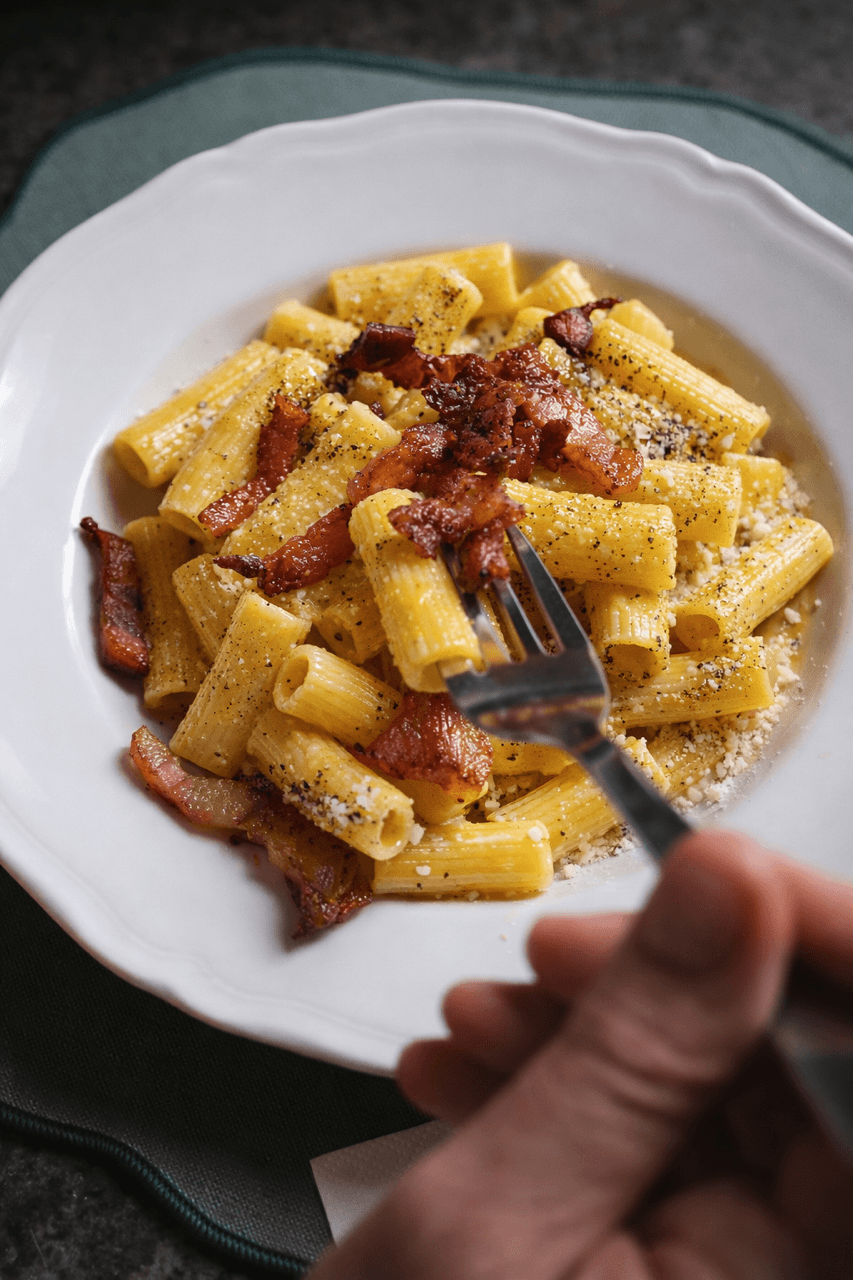
Four things between them give you a clear picture of the city's food culture: supplì (fried rice balls with mozzarella and tomato), maritozzo (the cream-filled sweet bun that Romans eat for breakfast), amatriciana (pasta with guanciale and tomato), and coda alla vaccinara (oxtail braised with tomato and celery).
Q. Where on the spectrum from street to sit-down should travellers focus?
Eat supplì standing up at a pizzeria al taglio counter, the maritozzo in a busy morning bar, the amatriciana in a traditional trattoria, and the coda alla vaccinara when you find a serious old-school restaurant with a proper Sunday menu. Each one represents a different moment in the day and a different price point. Between them they explain a lot about how Romans eat.
Q. And what is coda alla vaccinara worth knowing about specifically?
It originates from the cucina povera tradition of using the less prized cuts of meat and cooking them long enough to become tender and rich. Oxtail is braised slowly with tomato, celery, pine nuts and raisins. It is one of the defining dishes of Roman trattoria cooking and one of the most distinctively Roman foods you can order. It is also a meal that asks for time and a glass of wine, which is the way Romans intended it.
Francesca's Rome is the one that opens up when you stop joining queues and start letting the city carry you. Book the major sites in advance. Walk the Palatine. Cross the Tiber for an evening in Trastevere. Eat the four dishes that define the city. Come in spring, autumn, or even winter. Rome rewards exactly the attention most visitors are too rushed to give it, and the version of the city that opens up when you give it that attention is the one you come back for.

Rome travel FAQ
Explore more Rome-specific insights to plan your next trip with locals.